Topic
Your PDF is costing you readers - how to do it better
PDFs have been an integral part of corporate communications for years. White papers, product brochures, annual reports and magazines are created, exported and made available for download. The workflow is familiar and production is straightforward.
However, the way in which content is consumed has changed fundamentally.
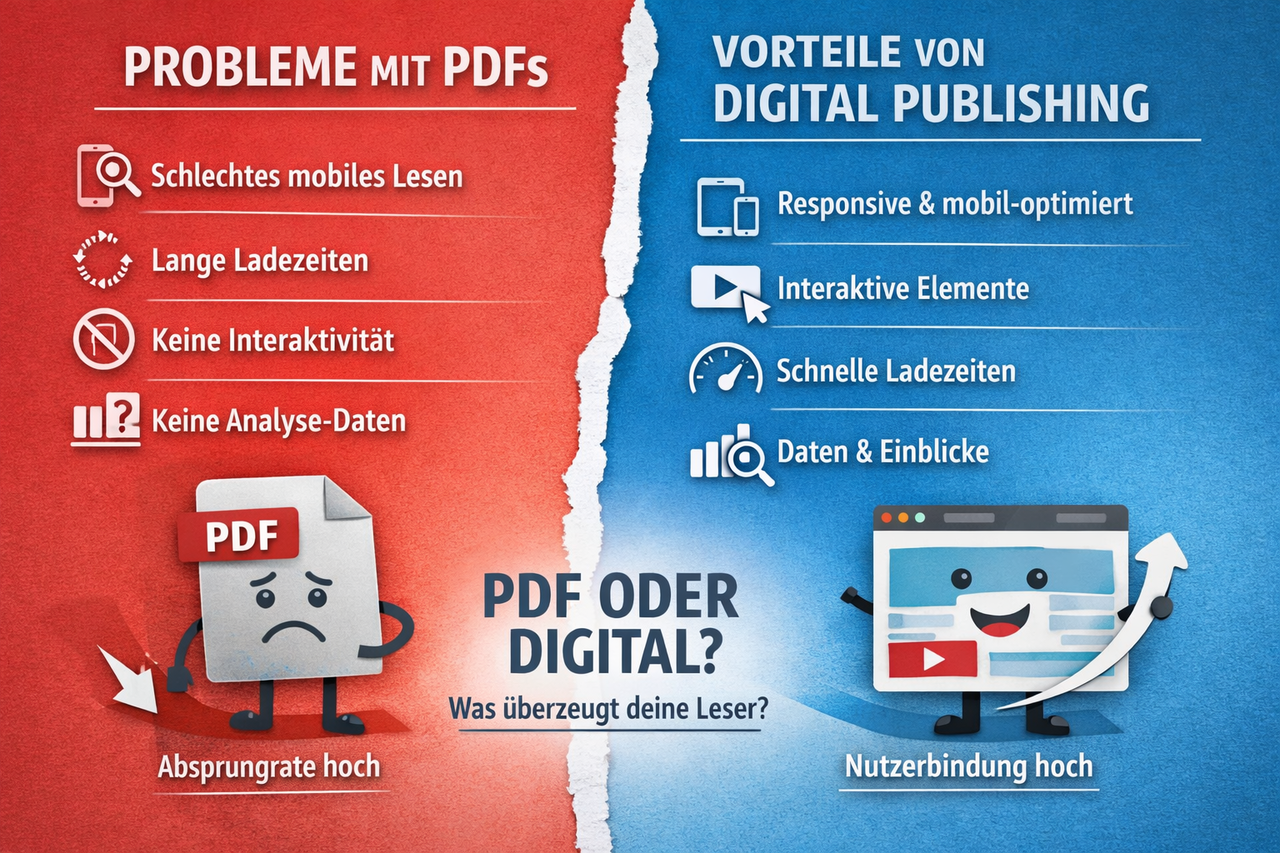
The problem: PDFs are static in a dynamic world
Today, digital content is predominantly read on the move. It is scrolled, not browsed. They react to user behaviour. They contain videos, animations or interactive elements.
A PDF cannot do that.
On the smartphone, a PDF often means:
Zooming instead of smooth reading
Scrolling in the wrong format
long loading times
Limited interaction
The result: users bounce.
Today, a static document competes with interactive, responsive and multimedia formats. And it often loses this competition in the first few seconds.

"Content is king, but distribution is queen and she wears the pants."
- Jonathan Perelman, 2015
Attention is scarcer than ever today
Digital communication is in direct competition with social media, news feeds and personalised platforms. Anyone offering content must deliver more than just information.
Modern readers expect:
Clear visual guidance
Quick orientation
Short loading times
multimedia supplements
convenient mobile use
A PDF was never developed for these requirements. It is a document format - not a digital experience format.
What you need instead
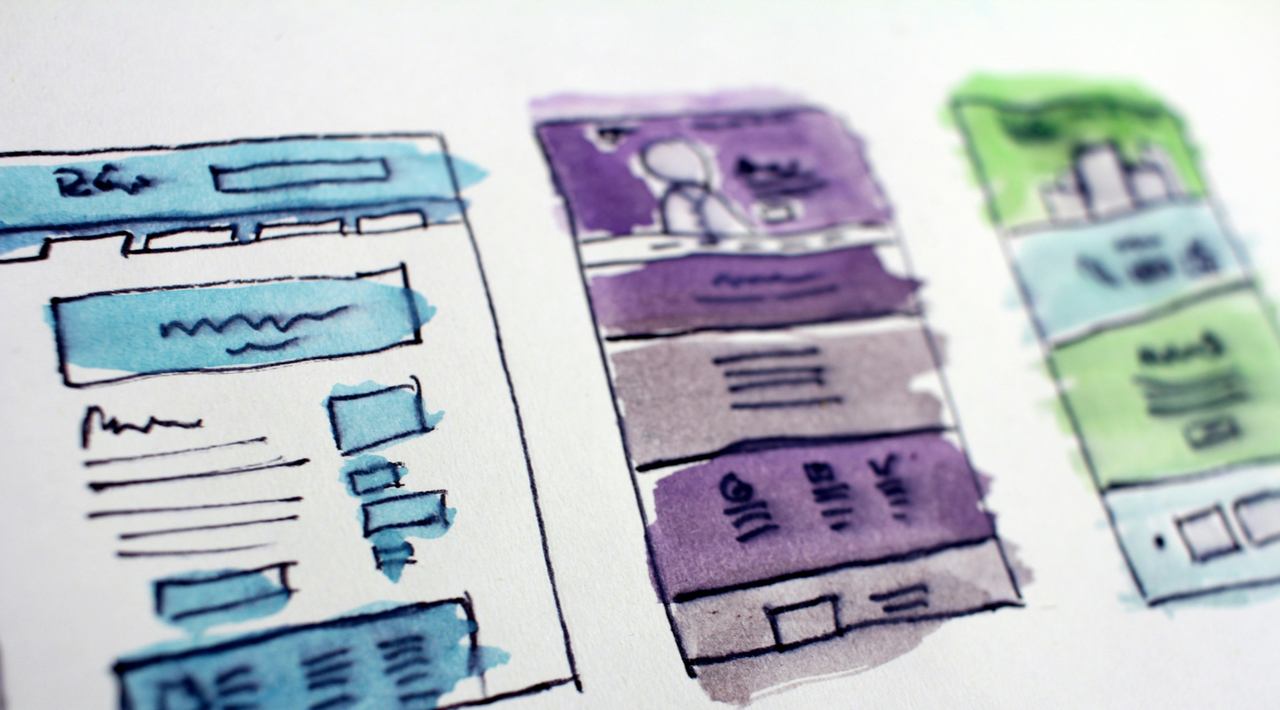
Digital publishing does not simply mean "putting PDFs online". It means designing content for digital use.
These include:
Responsive layout - content must adapt to screen sizes - automatically and cleanly structured.
Visual hierarchy - Clear headings, intermediate sections and modular content provide orientation.
Interactive elements - videos, animations, embedded content or clickable areas increase the length of stay and improve the user experience.
Performance & data protection - Fast loading times and data protection-compliant integrations are no longer an optional extra, but a must.

The change of perspective
The real change in digital publishing is not technical - it is conceptual. Many companies still start with a finished layout and ask themselves at the end of the process how this can be digitally reproduced with as little loss as possible. But this approach falls short.
Digital publishing means thinking content for the screen right from the start. Not in fixed page formats, but in flexible structures. Not in double pages, but in reading flows. Not in static PDFs, but in modular content building blocks.
Those who make this change of perspective plan differently. Content is structured more strongly, sections are organised more clearly and information is formulated more precisely. Multimedia elements are not added retrospectively, but used deliberately. User guidance is actively designed - through visual hierarchies, interaction points and clear dramaturgy.
This not only changes the format, but also the way the team thinks. Design, content and technology no longer work one after the other, but together to create an overall digital experience. The goal is no longer the perfect printed page, but the best possible user experience.
Only when this change takes place in the mind does true digital publishing emerge - not as a digitised brochure, but as an independent, interactive communication format.
Organisational challenges in the company
The switch from PDF to true digital publishing is not just a question of format, but also of internal processes. In many companies, workflows have grown historically: content is created, designed, approved and then exported as a PDF. This process is well established - and therefore difficult to scrutinise.
However, digitally conceived content requires a different kind of collaboration. Editing, design, marketing and IT need to talk to each other earlier. Content is planned on a modular basis, visual elements are used strategically and technical framework conditions are already taken into account in the concept phase.
There is also a cultural factor: digital publishing requires a willingness to experiment. Interactive formats, new narrative styles or multimedia content initially seem more complex. However, more efficient processes are created in the long term because content can be reused, customised and used more flexibly.
Companies that take this step benefit twice over: they improve the quality of their communication and at the same time create future-proof structures.

Measurability instead of gut feeling
An often underestimated advantage of digital publishing is the ability to analyse it. While with a PDF it usually remains unclear whether and how intensively it was actually read, digital formats provide valuable insights. Which sections are viewed for a particularly long time? Where do users skip? Which content is clicked?
This data makes it possible to continuously optimise content. Digital publishing thus becomes not only a communication tool, but also a management tool. Decisions are no longer based on assumptions, but on real user behaviour. Those who utilise this opportunity will increase the impact of their content in the long term.
Three typical mistakes in digital publishing
Simply "put the PDF online" - Embedding a PDF on the website or offering it as a download is not yet digital publishing. It remains a static document - with all the familiar limitations.
Content not optimised for mobile use - The majority of digital content is now consumed on smartphones. If you don't think about layouts or text volumes for small displays, you will lose readers within the first few seconds.
Using interactivity as an end in itself - Videos, animations or embedded content should offer added value. Too many effects without a clear function appear restless and cluttered. Good digital formats are deliberately designed - not over-staged.

Designing content as an experience
Modern readers expect more than just information. They want to be guided, be addressed visually and be able to grasp content intuitively. Good digital formats therefore work with clear sections, strong subheadings, visual contrasts and targeted multimedia elements.
This is not about effects, but about dramaturgy. Content should have a recognisable structure: Introduction, deepening, orientation, conclusion. Thinking of content as an experience not only increases the length of stay, but also the impact of the content.